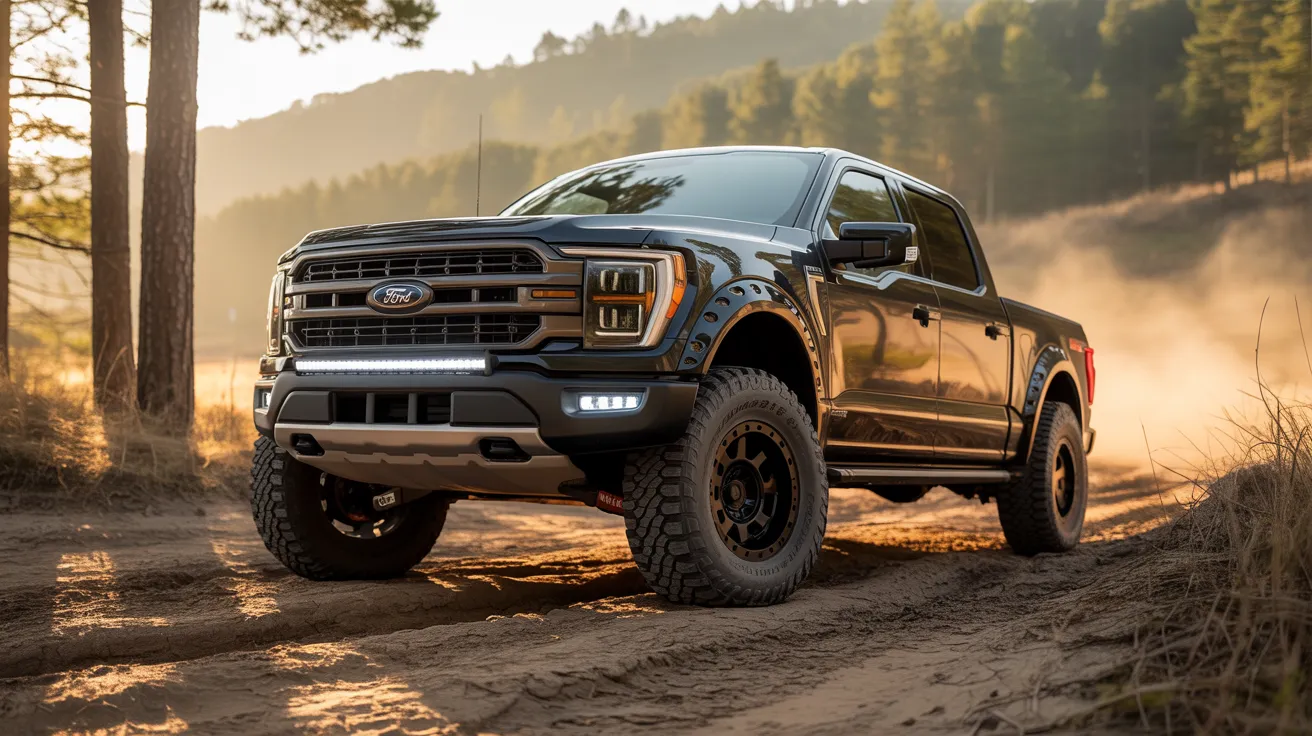
As you look for lift kits and truck accessories in Reading, first decide whether a leveling option or full suspension lift is right for you. A leveling kit corrects factory rake and maintains daily manners, while a suspension lift system provides clearance, wheel travel, and larger tire fitment. Make sure you have precise year, trim, drivetrain, and suspension details to verify Rough Country compatibility. Plan your budget for tires, alignment, and add-ons including steps, lights, or liners—you'll see how the right setup comes together.
Essential Information
- Choose a leveling kit to remove factory rake while keeping near-stock handling and fitting slightly larger tires for daily driving.
- Choose a suspension lift for increased ground clearance, suspension articulation, and trail capability, understanding that steering response may differ.
- Validate proper fitment using your truck's year, make, model, drivetrain, trim, cab, bed, and suspension package before placing your Rough Country components.
- Align lift height and shock choice with your use, addressing commuting, trail use, towing, or intensive off-road driving.
- Budget for more than the kit price, including alignment, labor, wheels, tires, shocks, and add-on accessories like steps, lights, and liners.
Suspension Lift Kits vs Leveling Kits
Even though both enhancements change your truck's stance, suspension lift kits and leveling kits fix separate issues and give different outcomes. A leveling kit tends to raise the front to match the rear, rectifying factory rake with minimal change to geometry, ride height, and daily drivability. You use one if you seek a cleaner look and room for slightly larger tires.
A suspension lift kit raises the entire truck and modifies key components to deliver increased clearance and suspension movement. You'll observe larger improvements in ride height, off-road performance, and tire choices, though you should plan for handling tradeoffs, steering changes, and a higher center of gravity. When you want mild visual correction, level it. If you need real clearance and articulation, lift it and organize the supporting modifications around your specific needs.
Which Rough Country lift kit works with your truck?
Start by gathering your truck's year, make, and model, drivetrain, and your usage goals, since Rough Country creates lift kits read the full story based on exact structural design and performance goals. This data helps you identify which suspension parts, brackets, and fasteners install without issues without geometric conflicts.
Then check factory ride height, cabin layout and cargo bed setup, axle type, and if your truck runs 2WD, 4WD, or adaptive suspension. Rough Country compatibility guides make this easy, although you should check fitment accuracy versus trim-level hardware and factory package variations. A kit designed for a Silverado 1500 might not work with a Trail Boss, and a Ram with pneumatic suspension necessitates different provisions rather than a coil-spring vehicle. By verifying fitment first, you prevent fitment surprises, hardware conflicts, and returns.
Determine which Rough Country lift kit works with your driving habits.
Pair the kit with your driving style, and you'll enjoy better ride quality, durability, and tire clearance without purchasing unnecessary capability. If your truck spends most days commuting, go with a light leveling kit from Rough Country or a 2- to 3.5-inch suspension setup optimized for daily comfort and predictable steering behavior.
When you divide time between road and off-road use, move up to a suspension upgrade featuring premium shocks and corrected arm angles. You'll enjoy stronger off road handling, better articulation, and clearance for larger tires without overstressing original components. For extensive off-road use, prioritize raised struts, Rough Country N3 or Vertex dampers, and kits that maintain driveline angles under compression. The right Rough Country package should match load capacity, speed, and terrain, and how firm a ride you can accept.
Top Rough Country Truck Accessories
Round out your new lift system including Rough Country add-ons that address the real weak points you'll see once you lift it and add bigger tires. Start with upgraded entry steps or rock sliders, which bring back vehicle access and deliver side protection when your truck sits higher and wider.
Then focus on sight lines and handling. Rough Country LED lightbars improve usable sightlines on dark trails, job sites, and rural roads without hard-to-manage integration. Seat covers and floor protection safeguard the interior from mud, gravel, and water you'll drag in after trail use. Fender flares limit mud spray and accent the broader stance made by bigger tires. For towing or pulling, heavy-duty hitches, recovery hooks, and winch-ready bumpers deliver capability without affecting fit. Go with add-ons that complement your truck's new profile and workload.
What Budget Should You Plan for Your Build?
Once you've selected the lift kit and complementary components, establish a budget that exceeds the advertised kit price. You'll require funds for shock absorbers, rims, tires, alignment, installation costs, and any drivetrain or steering adjustments your platform needs. Brand reputation is crucial here; top-tier kits typically provide tighter tolerances, better ride quality, and less installation trouble.
For accurate cost estimates, expect budget-friendly spacer or leveling kits to start at the bottom, while full suspension systems with control arms, tuned dampers, and larger tires escalate rapidly. Installation complexity, shop rates, and alignment calibration can add significantly. You should also budget for supporting upgrades like gear changes, brake components, and recovery gear if you plan to use it off-road. If budget is a concern, compare financing options thoroughly and focus on dependability over showy accessories.
Popular Questions About Lifts
Do Lift Kits Impact Factory Warranty?
Yes, lift systems can affect your factory warranty coverage, yet they don't automatically void it. You may face warranty implications if the dealer establishes the lift kit caused or contributed to a breakdown. Drive system, steering, suspension, and drivetrain disputes commonly cause dealer disputes. You should keep installation records, use quality components, and keep service intervals. This helps you dispute declined claims and protect coverage where the modification isn't responsible.
Do Larger Tires Require Re-Gearing My Truck?
Yes—if you jump multiple tire sizes, you'll often need gear changes. For example, when you move from 31s to 35s, your truck may feel slow, shift improperly, and put strain on the drivetrain when carrying weight. Re-gearing reestablishes optimized gear ratios, helping you recover acceleration, towing performance, and transmission behavior. You might not need regearing for modest tire increases, however, if performance, fuel mileage, or gear shifting decline, it's usually the right call.
When Should You Check Your Lift Kit?
You should inspect lift kit components at 500 miles, later at every oil change or 3,000 to 5,000 miles, according to driving patterns. Regular reviews let you catch bushing deterioration, shock seepage, bracket harm, and alignment mishaps early. Test fastener snugness after difficult terrain, towing episodes, or impacts. If you drive through mud, salt-laden, or rough terrain regularly, shorten intervals and inspect steering and suspension systems regularly.
Does a lift kit alter your vehicle's towing and payload limits?
Yes, a lift kit can change your vehicle's towing and payload specifications. When you raise ride height for improved clearance, you alter suspension setup, balance point, and leverage on components. That can reduce stability under weight and heighten drivetrain pressure, especially with larger tires. You should respect your maker's specs unless an engineered kit specifically documents modified ratings. Right alignment, gear selection, and brake performance matter too.
Is alignment work essential once you add truck upgrades?
Yes—if accessories alter suspension height, suspension angles, steering angles, or tire size, you require an alignment service. You'll feel the theory fast: slight changes can pull your truck off-center, reduce tread life, and compromise handling. A proper wheel alignment restores camber measurement, caster, and toe to spec. After certain installs, you may also need brake calibration for driver-assist accuracy. You protect tire mileage, steering control, and practical safety by checking alignment immediately.
Summary
Determining the right suspension setup and accessories comes down to how you use your truck, your aesthetic choice, and your available funds. When you connect a Rough Country system alongside your driving preferences, you'll get strength, elevation, and visual appeal which synchronize like a well-tuned drivetrain. Add smart accessories, plan your spend carefully, and you'll build a automobile proving practical on the road, competent outdoors, and ready for whatever job comes next.